Back
Back 

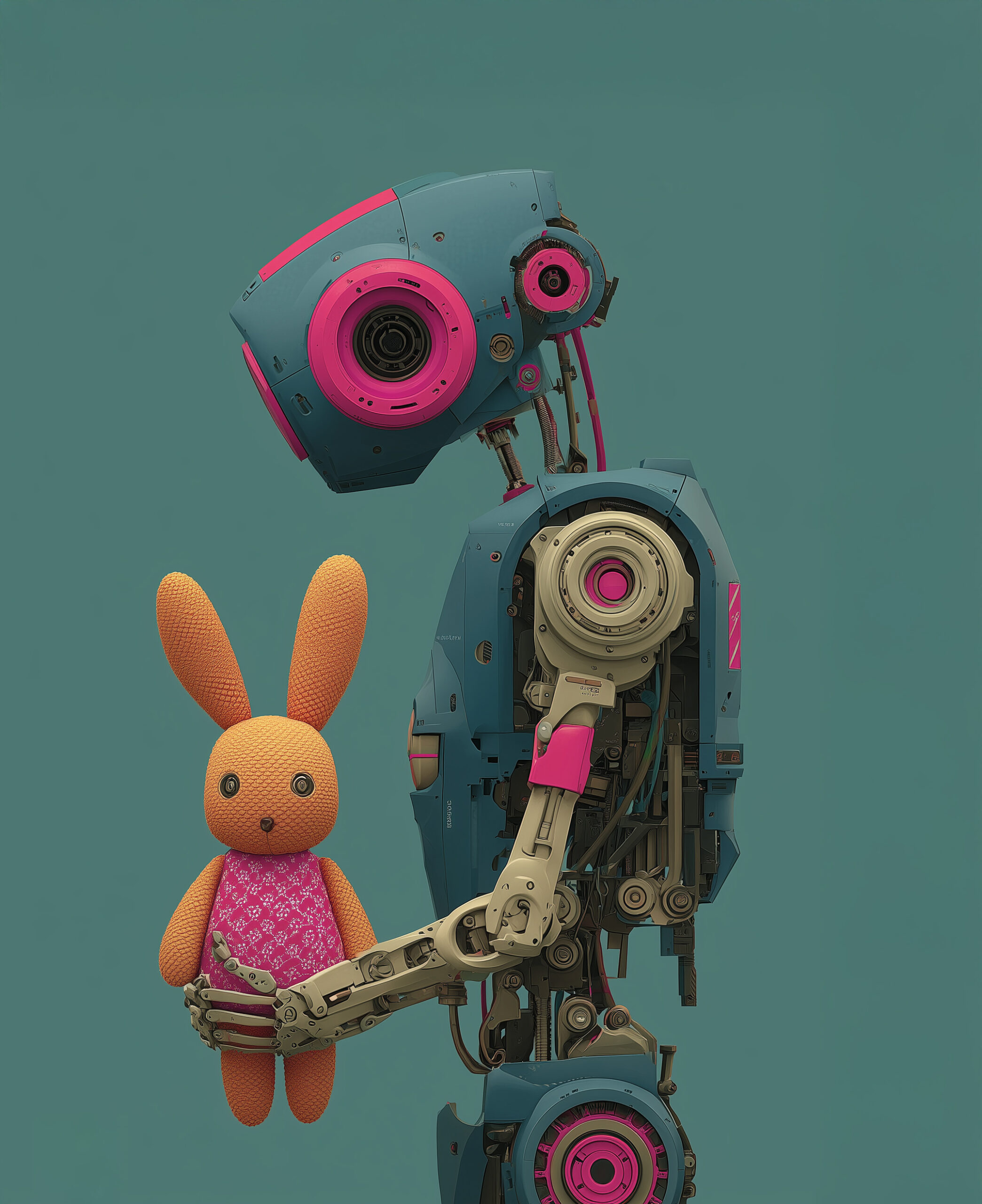
Your robot colleague. You take him to the pub — he opens up his metal casing after too many beers, liquid spills, he can go again. He knows it’s Monday, but he can’t feel it’s Monday. So, he’s in the midweek swing of things, every working day. He doesn’t need to put his own jarring music playlist on to work — and he’s totally indifferent to yours.
At the moment, attention in the world of work is pretty absorbed by generative AI. But while we’re talking prompts and productivity hacks, the number of physical robots entering and changing the workplace is rising too.
Amazon’s Millionth Robot
In July, Amazon announced that it had deployed its millionth robot, delivered to a fulfilment centre in Japan in June.
Robots in the workplace now do a lot of the heavy lifting — literally. Some handle up to 1,250 pounds at a time in Amazon’s packaging processes. They’re involved in around 75% of customer orders, so it’s highly likely your latest parcel was picked, packed, or carried by a robot.
The Robot With a Sense of Touch
This year, Amazon introduced its first robot with a sense of touch — the Vulcan.
Typically, robots are numb, which is why we’ve all seen (and laughed at) those clips of them meeting an unexpected object and repeatedly crashing into it. But not the Vulcan.
It can feel when it comes into contact with something. It can sense how much space is in a storage compartment, move objects around to make room for another, and even understand how much force it’s applying to avoid damage.
The Vulcan uses “end of arm tooling” to do this — something that resembles a ruler stuck onto hair straighteners. For picking up items, it uses a suction cup and an onboard camera.
Currently, the Vulcan can pick up around three-quarters of the products that Amazon offers. And when it can’t, it does what many humans struggle to do — it asks for help. Then, a human employee steps in to lend a hand.
How Robots in the Workplace Could Change the Career Landscape
Amazon says that Vulcan is there to help humans work more comfortably — it reaches high and low, so people can focus on tasks at a mid-level height.
They also say it’s a job creator, introducing new roles like on-site maintenance engineers and robotic floor monitors.
Understandably, though, not everyone is convinced. A fulfilment associate isn’t automatically going to become a maintenance engineer. As robots in the workplace continue to grow in number, the conversation about automation, skills, and opportunity needs to grow with it.
Let’s Stay Curious
LinkedIn is full of people worrying about AI — or maybe that’s just my algorithm. But there seems to be less noise about physical robots in the workplace.
Maybe sci-fi prepared us for this. We’ve been bracing for (hopefully friendly) Terminators and Cybermen for decades.
Or maybe it says something about us. When robots take over manual labour, we accept it. But when AI takes over creative work — art, writing, research — that feels more personal. The panic isn’t just about job loss; it’s about identity. Perhaps the real story here isn’t about the robots at all. It’s about how we measure the value of human work — and how curious we’re willing to stay as the lines blur.