Back
Back 

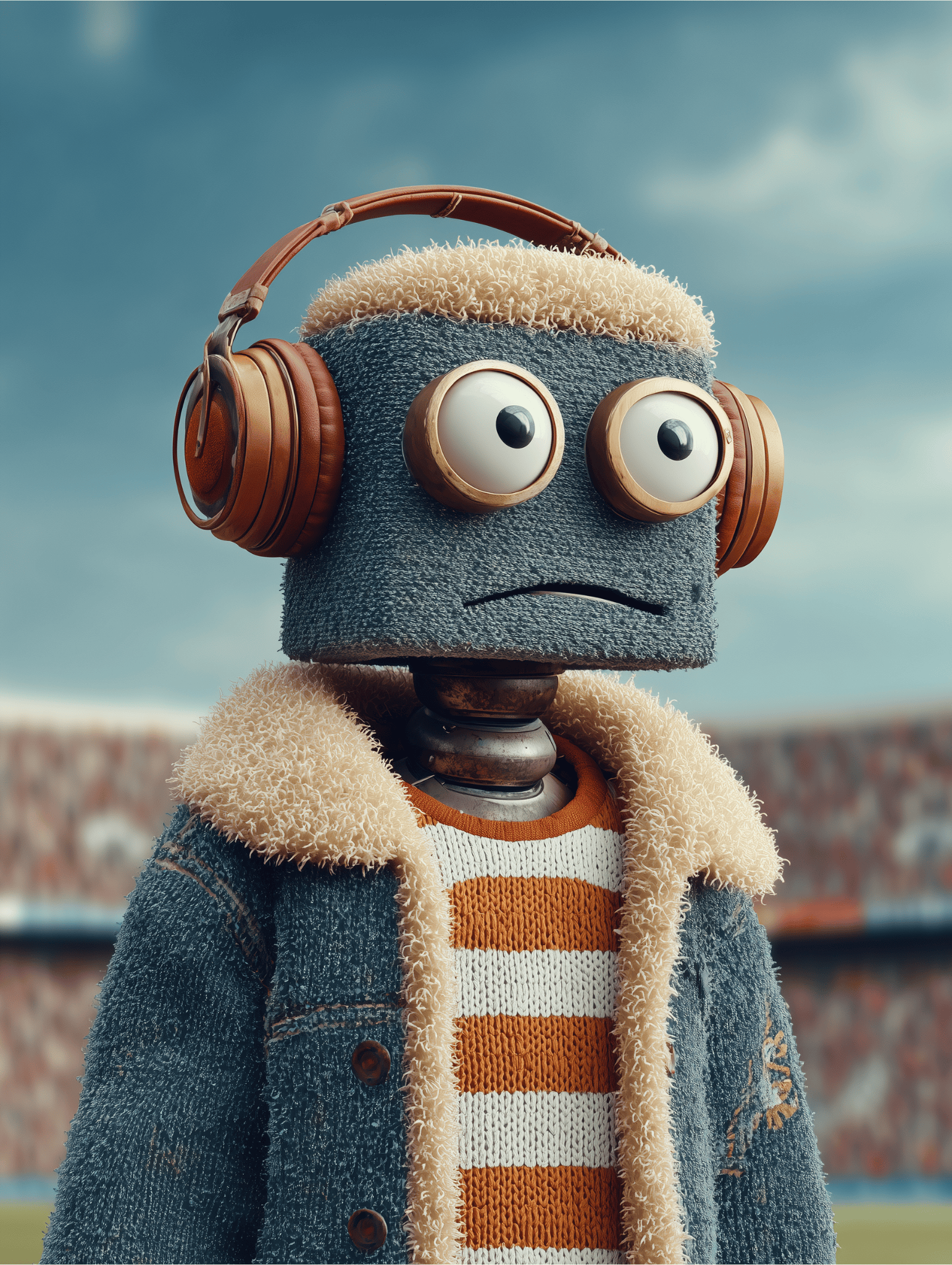
Picture this: it’s Saturday night, the stadium lights blaze, the ball is in play and instead of your favourite commentator’s familiar voice, you hear an algorithm. It doesn’t stumble, it doesn’t mangle a name, it doesn’t shout “GOAL!” prematurely.
Is this the future of sports commentary – a precise, tireless voice in the commentary box or a colder, digital echo of the game without a human heartbeat?
AI in sports broadcasting
Not long ago, that would have sounded like science fiction. Today, AI can genuinely produce automation in live sports. In 2025, a research team demonstrated a system capable of analysing basketball games in real time: tracking players, recognising on-court events and turning those detections into spoken commentary via text-to-speech. Reported accuracy figures included roughly 97% for court calibration, around 92.5% for player/object detection and approximately 85% for action recognition.
In parallel, a 2024 generative model was used to create narration for highlight reels at events such as the US Open, Wimbledon and the Masters. That system could operate at roughly fifteen times the speed of conventional text production, achieving metrics like Rouge-L ≈ 82 and perplexity ≈ 6.6. These developments show that the technical foundation for automated sports commentary is already in place.
Speed versus emotion
AI behaves like a flawless statistician: instant, exhaustive and unforgetting. It can pull up historical comparisons, compute probabilities and annotate plays in milliseconds. That raw speed transforms production workflows, highlight packages, data overlays and instant replays can be annotated almost immediately.
Yet speed is not the same as soul. The difference is a bit like comparing a perfectly rendered video game to a gritty, rain-soaked match on real grass: the digital version may be technically immaculate, but it lacks the smell of the pitch, the communal roar, and the human inflection that makes one moment unforgettable.
Trust from the audience
Surprisingly, experiments indicate that audiences may be more forgiving of AI authorship than we expect. In studies where readers were told whether a match report was written by a person or generated by AI, perceived credibility did not differ significantly.
In other words, when the output is high quality, many consumers judge it on merit rather than origin. That suggests that acceptance of AI-generated commentary is plausible – provided the AI consistently delivers accuracy and relevance.
What can go wrong
There are real risks and limitations. Automated systems can struggle with the messy, split-second complexity of live sport: overlapping events, rapid player substitutions, or unusual plays can confuse detection pipelines and lead to misidentifications or awkward, out-of-context observations.
An AI might mispronounce a name, fail to grasp a rivalry’s emotional subtext, or miss the cultural reference that would make a line resonate with local audiences. Perhaps most importantly, machines still find it difficult to generate the spontaneous humour, outrage, tenderness or sheer human exuberance that a seasoned commentator brings. For a portion of fans, the “scratch” in a commentator’s voice, the tiny imperfections and emotional tremors, is part of the experience; replacing that with a neutral, polished voice may feel like losing a familiar friend.
The most likely future: a duet, not a duel
A more realistic scenario is collaboration rather than replacement. Imagine a two-person act where AI supplies instantaneous stats, player tracking and probability estimates while a human commentator weaves those inputs into stories, jokes and emotional peaks. The machine handles the tedious, high-speed data work; the human adds context, seasoning and temperament. That partnership could deliver broadcasts that are both richer in information and more resonant emotionally.
The future of work and AI
What’s happening in the commentary box is a mirror for many workplaces. Just as AI can now break down a match into plays and stats, recruitment technologies are parsing CVs, screening candidates and predicting job fit faster than ever before.
But just as fans still crave the excitement of a human commentator, candidates and hiring managers still crave a human connection – empathy in the interview, a sense that their story is heard, a tailored conversation about what comes next.
This is exactly where organisations like PeopleScout step in: combining technology with the “human touch.” AI may speed up sourcing and screening, but humans provide context, cultural fit, and relationship-building that lead to better long-term matches.
The future is not about replacing people with machines, it’s about designing smarter, more balanced teams where both play to their strengths.